
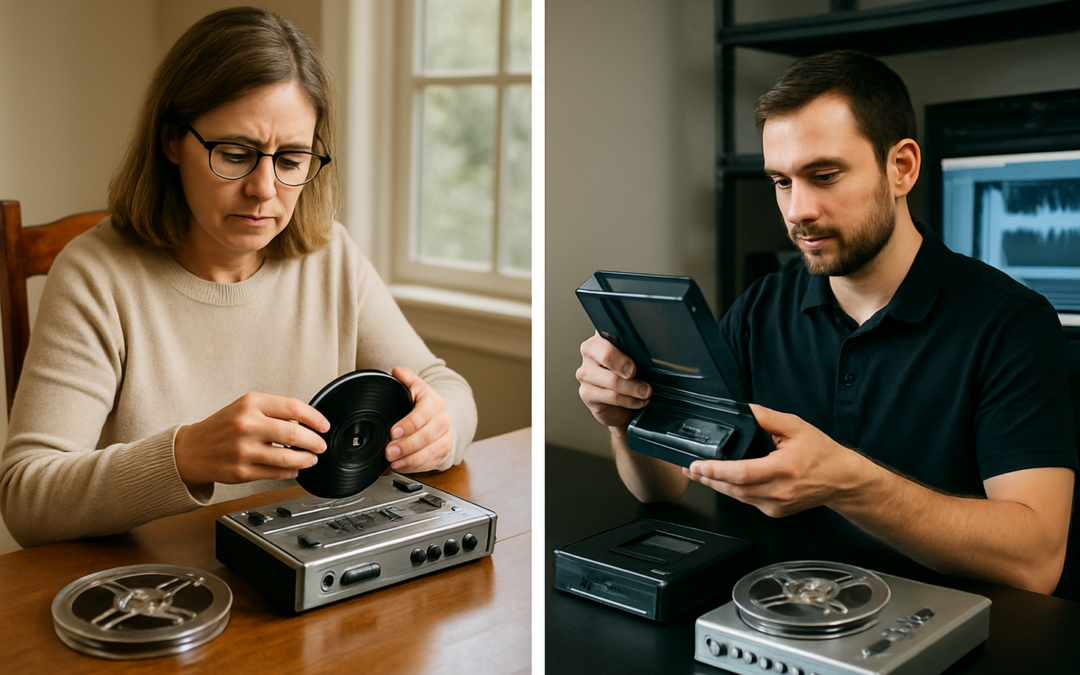
A box of cassette tapes sounds like a simple weekend project. Plug in a cheap USB cassette deck, hit record, and burn the files to a laptop. Then the tape jams halfway through side two, the audio comes out muffled and warbly, and you realize the voice you were trying to save, maybe a grandparent reading a bedtime story or a wedding toast from someone who's gone now, is harder to hear than it was on the original tape.
Audio media doesn't forgive mistakes the way photos do. A scratched print can still be scanned and restored later. A cassette that snaps in a dying deck, or a reel-to-reel tape that sheds its oxide coating during a rushed transfer, can lose the recording permanently. Before you decide how to handle your family's cassettes, vinyl records, or reel-to-reel tapes, it helps to know exactly what each path costs you in money, time, and risk.
This article compares DIY audio transfer against professional audio transfer services so you can make that call with your eyes open.
The Short Verdict
DIY audio transfer can work reasonably well for a handful of tapes or records that are already in decent physical condition and where you're comfortable with consumer-grade sound quality. Professional transfer is the safer choice when the media is old, brittle, warped, moldy, or irreplaceable, and when you want the kind of clean, calibrated playback that only purpose-built equipment and trained ears can deliver.
DIY vs. Professional Audio Transfer at a Glance
|
Criteria |
DIY Transfer |
Professional Transfer |
|
Upfront cost |
Low to moderate for a deck, cables, and software |
Per-item fee, no equipment to buy |
|
Audio quality |
Inconsistent, depends on gear condition |
Calibrated and consistent across formats |
|
Risk to original media |
Higher with fragile or aging tape |
Lower, handled by trained technicians |
|
Time investment |
Hours per tape or record, plus troubleshooting |
Drop off and wait |
|
Damage handling |
Limited to none |
Cleaning and restoration techniques available |
|
Best for |
A few items in good shape, hobbyist budgets |
Large or fragile collections, irreplaceable recordings |
Upfront Cost: Cheaper Isn't Always Cheaper
A basic USB cassette or turntable setup looks inexpensive on paper. But low-cost decks are built for casual listening, not for reliably pulling a clean signal off aging magnetic tape or a worn vinyl groove. If the first unit jams, skips, or produces hissy, distorted audio, many people end up buying a second or third device trying to get a usable result.
Professional audio transfer services charge per item, which can feel like a bigger number up front. But that fee includes equipment that's actually built for the format, whether it's a cassette, an 8-track, a vinyl LP, or a reel-to-reel tape, and it avoids the cost of gear you'll only use once.
Audio Quality: Consistency Matters More Than You'd Think
Consumer tape decks and turntables vary widely in how well they're calibrated. A deck with worn-out heads or bad azimuth alignment will flatten out highs, introduce wobble, or add hum you can't easily remove afterward. Vinyl playback is just as sensitive: the wrong stylus or a turntable that isn't speed-accurate will color the sound in ways that are hard to undo once it's digitized. The same tradeoff shows up with videotape, where tape stretch and alignment problems are just as unforgiving, which is why a proper VHS to digital transfer relies on equipment maintained specifically for the format rather than a bargain deck.
Professional setups use equipment that's maintained and calibrated specifically for transfer work, which produces a cleaner, more faithful digital copy. This matters most for recordings you can never replace, like a voicemail saved to cassette or a live recording of a family member singing.
Risk to the Original Media: The Part People Forget
This is the real stake in DIY audio transfer. Cassette tape and reel-to-reel tape are physical, chemical objects. They stretch, they get brittle, and older tape can suffer from sticky shed syndrome, where the binder breaks down and the tape gums up inside the player. Running a fragile tape through an unfamiliar or poorly maintained deck increases the odds of a jam, a snap, or oxide shedding that damages the recording while it's playing.
Vinyl has its own risks. Warped or moldy records can skip or stick, and forcing a stubborn record through a low-end turntable can gouge the grooves permanently. A reel-to-reel transfer done by someone experienced with these specific failure points is far less likely to end in a damaged original, which matters a great deal if that tape is the only copy that exists.
Time Investment: What a Few Boxes Actually Costs You
Each cassette or LP has to be played back in real time to capture it, and that's before you factor in cleaning tape heads, adjusting levels, or re-recording a side that came out distorted. For a shoebox of ten tapes, that can easily eat an entire weekend, and a full collection from an attic or basement can take far longer.
Dropping off a collection for professional transfer trades that time for a short wait. For families juggling work, kids, and everything else, that difference alone often tips the decision. A vinyl to digital service handles the playback and capture work in bulk, which is hard to replicate at home without dedicating a full day to it.
Handling Damage: DIY Has a Ceiling
DIY tools are built to play media, not repair it. If a tape has wrinkled, a record has mold on it, or a reel has been stored loosely and lost tension, a home setup usually can't do much beyond attempting playback as-is. Professional services bring cleaning and restoration techniques designed for exactly these problems, which can mean the difference between a recording that plays cleanly and one that's unintelligible.
Who Should Choose DIY vs. Professional
DIY transfer makes sense if you have a small number of tapes or records in solid physical condition, you're comfortable with a hobbyist level of audio quality, and the recordings aren't irreplaceable. It's a reasonable option for casual home recordings you just want quick digital access to.
Professional transfer is the better call for anything fragile, old, moldy, warped, or one-of-a-kind, for larger collections where time adds up fast, and for families who want consistent, high-fidelity results without the risk of losing a recording to a jammed deck.
Preserve Your Family's Sound with Leave A Legacy
Leave A Legacy specializes in converting aging home audio, including cassette, vinyl, and reel-to-reel recordings, into modern digital files using professional-grade equipment and hands-on care from trained technicians. Each item is handled individually, with cleaning and restoration options available for tapes and records that have already started to deteriorate. Learn more about who we are and reach out to start preserving your family's sound before another tape or record is lost for good.